
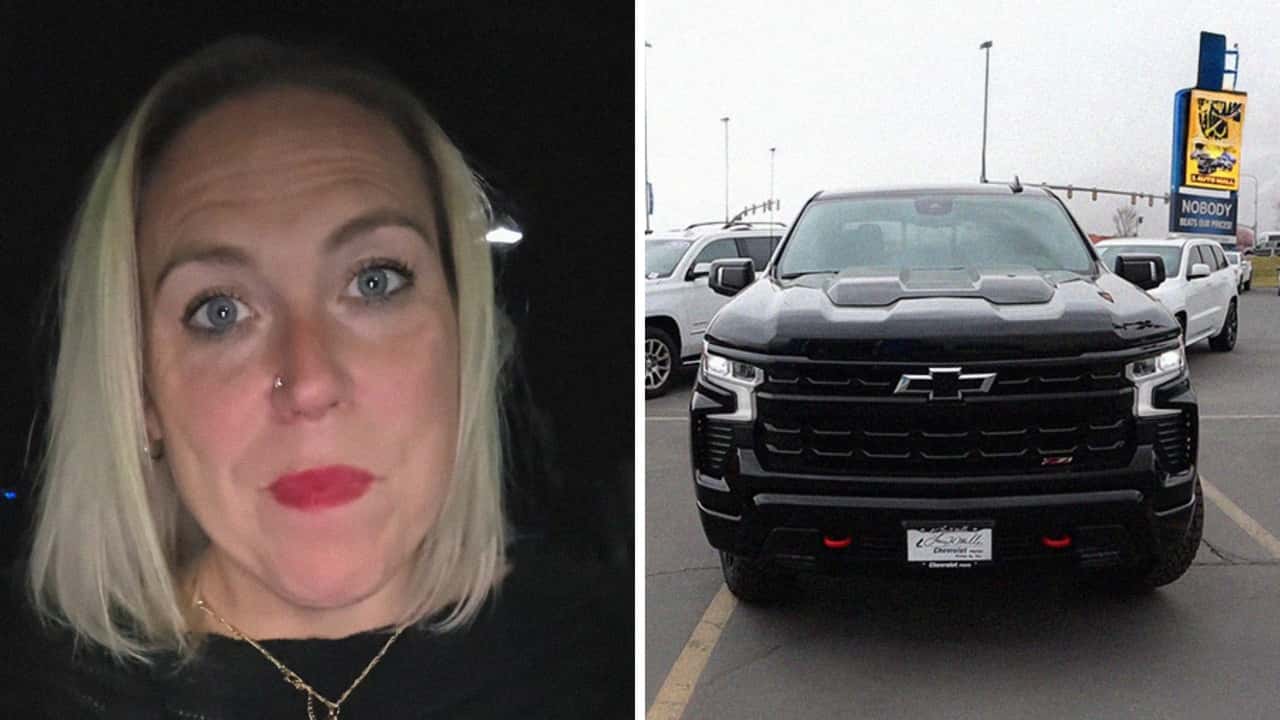
She bought the Chevrolet Silverado because she needed reliability: big miles, heavy towing, and daily driving. But the combination of a fast-growing recall, controversial oil-weight changes, and a knocking engine has left a Kansas City, Missouri TikToker wondering if the truck she loves might be headed for an early death.
The clip from real estate agent Michelle Isabell (@michellejisabell) lays out the situation in an almost lawyerly fashion: a detailed timeline of when she bought the 2022 Silverado, how often she serviced it, what the recall required, and why she believes the dealership’s verdict for her growing engine knock doesn’t add up.
“If anybody else has had this issue, [what did you do] in order to get your engine replaced because I want to keep my truck for a really long time,” she said in the clip that’s been viewed more than 11,000 times.
Isabell said she first brought the truck in when the dashboard began warning her that the oil level was low, long before she hit the 5,000-mile service interval, something she notes had happened “every single time” since she purchased it.
When General Motors (GM) issued Safety Recall 24V-172 earlier this year for certain 6.2-liter V-8 engines experiencing excessive oil consumption, she assumed her symptoms put her squarely in the zone for a repair or engine replacement. According to her dealership’s assessment, however, the truck “passed” the recall test and didn’t qualify for further work.
A Recall With 2 Outcomes
GM’s recall covers roughly 52,000 trucks equipped with the 6.2-liter L87 V-8 engines built during specific production windows. The company told the National Highway Traffic Safety Administration (NHTSA) that affected engines may consume oil faster than expected due to internal wear, risking low oil pressure, bearing damage, or catastrophic failure if left unaddressed.
The automaker’s official remedy depends on how each truck performs during an oil-consumption test. Engines that fail can qualify for a full replacement. Engines that pass receive a switch to a higher-viscosity oil—typically 0W-20, per GM service documents—and a new oil-fill cap reflecting the updated requirement. GM has also extended warranty coverage on certain engines to 10 years or 150,000 miles, though only for vehicles that are part of the recall and inspection process.
Isabell said she followed each step the dealer recommended, including switching from 5W-30 to the thinner oil weight. But after that change, she says new leaks appeared around the engine seals, and the truck began knocking audibly under load. “I can hear that there’s a problem,” she says in the video. “But they are saying there isn’t.”
If frustration was what she hoped to tap into, her comments section suggests she hit the target. Several viewers claim they’ve fought similar battles with the 6.2-liter V-8. One commenter said their truck passed the recall inspection but began consuming oil at a rate of “two liters between oil changes,” leading them to trade in for a 5.3-liter model instead. Another commenter, identifying as a GM technician, told her that “those engines are junk…they eat cams and lifters left and right,” adding that replacing the engine is often the only meaningful fix.
Others took the conversation in different directions, accusing modern automakers of cutting corners, pointing out that GM earned more than $10 billion in net income in 2023, or arguing that today’s engines from any manufacturer are more prone to oil consumption and delicate tolerances than their predecessors. Some commenters blamed the oil-weight change itself, arguing that thinner oil can expose weak seals or accelerate wear, though GM has maintained in its filings that the viscosity change is an appropriate mitigation strategy for engines that pass inspection.
Isabell pushes back on the idea that maintenance or driving habits caused the problem. She says she has documentation for every oil change, all performed at a Chevrolet dealership, and that she changed the oil more frequently than the onboard monitoring system required. That routine, she argues, should help prove she followed every rule necessary to qualify for engine replacement.
Tension for Truck Owners
Modern truck engines routinely produce far more horsepower and torque than their predecessors while also running cleaner and more efficiently, engineering feats that depend on extremely tight tolerances and exact lubrication. That means a small shift in oil delivery, viscosity, or wear can have a much larger effect than it would in older V-8 designs.
An engineering analysis by SAE International has noted that today’s oils must balance fuel-economy demands with durability, sometimes leaving little margin for engines that develop internal wear earlier than expected.
For owners, that engineering reality can clash with expectations for longevity, especially in vehicles used for towing, commuting, and high-mileage work like Isabell describes. Heavy-use buyers often expect a full-size truck to run well past 150,000 miles with relatively routine service, a standard that places enormous pressure on recall outcomes when something goes wrong early.
Isabell says what frustrates her most is not the existence of a defect since GM acknowledged the issue in its recall filing, but the idea that she could be stuck with a failing engine simply because she followed the wrong maintenance intervals or because her truck technically “passed” a diagnostic she believes doesn’t reflect what’s happening under the hood.
“I love my truck,” she says. “I planned on using it for a really long time.”
For now, she’s hoping that documenting the symptoms publicly, gathering advice from other owners, and tagging Chevrolet on a larger scale will compel the company to take another look. Her comments section is full of suggestions: file a complaint with NHTSA, consult a lemon-law attorney, escalate within GM customer care, or push for a second dealership evaluation.
Whether those steps will lead to an engine replacement remains unclear. But her clip has become a gathering place for other Silverado owners navigating the same recall, many hoping that visibility will help get their trucks back on the road the way they once were.
Motor1 reached out to Isabell via email and direct message. We’ll be sure to update this if she responds.
